How to Host a Group Dinner in Midtown NYC

You've been put in charge of organizing a group dinner in Midtown, and the pressure is real. Headcounts shift. Preferences vary. The neighborhood is packed with options, but finding a place that works for everyone — and doesn't create logistics headaches — takes more than a quick search.
Whether you're coordinating a corporate group dinner, hosting clients, planning a holiday celebration or gathering friends before a show at Madison Square Garden, this guide will help make planning simpler. Learn how to choose a location, lock in your budget, manage dietary needs and book with confidence. By the time you're done reading, you'll know exactly what to look for.
1. Start With a Location That's Convenient for Everyone
Location is the first decision you'll make. In Midtown, convenience matters. Your guests may be arriving from offices across the city, hotels in the neighborhood, other boroughs or out of town entirely. Choosing a restaurant that's easy to get to makes attending simpler for everyone.
Penn Station, Moynihan Train Hall, Grand Central Terminal and Port Authority are all located in Midtown. A restaurant within walking distance of any of these makes organizing Midtown group dining significantly easier. Guests arriving by train, subway or bus can reach the venue without navigating unfamiliar streets or relying on ride shares during rush hour.
If many of your guests are traveling from out of town, proximity to their hotels matters just as much as transit access. The closer the restaurant is to where they're staying, the easier it is for them to arrive on time and relaxed.
2. Lock in Your Guest Count and Budget Early
The restaurant you choose will build your table layouts, staffing and service pacing around your headcount. An inaccurate number can create operational problems on the night of your dinner. Get firm RSVPs before you contact the restaurant. If your count is still fluid, give the venue a realistic range and update them as soon as the number firms up.
Once you have a headcount, set a per-person budget. Factor in beverages, tax and gratuity before you commit to a number. For a large group dinner in NYC, many restaurants require a minimum spend or deposit. Knowing these terms upfront prevents end-of-night surprises. Some venues set minimums based on the day of the week or time slot, so ask about those details when you inquire. Clarify how the restaurant handles payment for large groups. Some prefer a single check, while others can split by seat or course.
Designate one person to handle all communication with the restaurant. One contact ensures nothing gets lost in translation.
3. Choose a Dining Format That Works for Your Group
The dining format you choose sets the tone for the entire evening. There are three main options, and each serves a different type of occasion.
- Prix fixe: Pre-selected courses with limited choices per course. This format is ideal when you need simplicity and a seamless experience. Everyone receives their courses at the same time, the meal flows smoothly and you know exactly what the final cost will be before anyone arrives.
- Family-style: Shared dishes passed around the table. This dining experience feels natural for celebrations, social groups and anyone who wants conversation to flow without the formality of plated courses. It encourages interaction and creates a warmer, more relaxed atmosphere.
- À la carte: Full individual ordering from the regular menu. This format offers the most flexibility, where everyone orders what they like. However, it can cause the dinner to take longer and make splitting the bill tricky.
For groups, lean toward prix fixe or family-style. Your guests can focus on conversation instead of navigating a long menu, and the meal will move at a steady pace from start to finish.
4. Consider Everyone's Dietary Needs
Gather dietary restrictions and allergies from your guests well in advance. Share this information with the restaurant at the time of booking so they can prepare properly. Last-minute requests are harder to fulfill and risk leaving a guest feeling excluded or uncomfortable.
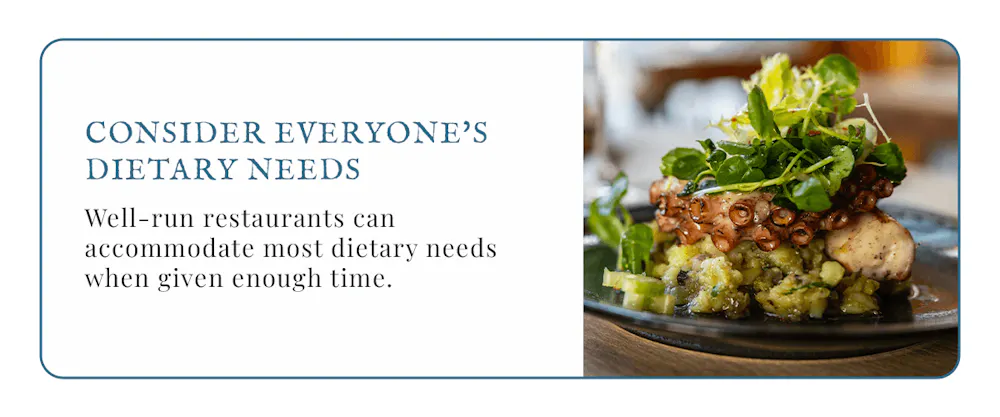
Well-run restaurants can accommodate most dietary needs when given enough time. Collecting this information early is an act of good hosting. It shows your guests you're thinking about their experience, and it gives the restaurant the chance to deliver on it.
5. Think About Seating and Space
The setup of your dinner matters as much as the menu. How your group is seated shapes the entire experience, from conversation flow to noise level.
One long table vs. multiple smaller tables: A single long table keeps everyone together and works well when you want the group to feel unified — ideal for toasts, announcements or when people need to hear one speaker. Multiple smaller tables create a more intimate feel and make side conversations easier, but they break up the group.
Private, semi-private, or main dining room: A private room gives you control over noise, privacy for business conversations and the ability to make toasts without disturbing other diners. Semi-private spaces (a sectioned-off corner or alcove) offer some separation without full isolation. Match the space to the occasion. Client dinners and corporate events usually benefit from privacy, while social gatherings can thrive in the buzz of the main room.
Noise level: In a busy restaurant, volume becomes an issue fast. If the evening involves presentations, toasts or deal discussions, you need a space where people can hear each other.
Layout and purpose: Consider what you want the evening to accomplish. Seated dinners with minimal movement work for formal occasions and structured agendas. If you want people to mingle, chat across groups or network, cocktail-style seating, bar access or smaller tables encourage people to get up and circulate.
Ask these questions when you're booking: How will the tables be arranged? Is there a private or semi-private option? What's the noise level like during service? A good restaurant will walk you through the options and help you choose the setup that makes sense for your group.
6. Book Early, Especially in a High-Traffic Neighborhood
Midtown is one of the busiest areas in New York City, and restaurant availability for large groups reflects that reality. Year-round event activity keeps the Penn Station and Madison Square Garden corridor consistently busy.
Book well in advance for group dinners and even earlier during peak seasons. Holiday weeks, major concert nights and sporting events fill up restaurants weeks ahead of time. Consider the Garden's schedule when you're choosing a date — a night when multiple events overlap can make restaurant availability tight.
For groups of eight or more, aim to book at least two to three weeks out. Booking early gives you better options for preferred time slots, specific seating arrangements and more flexibility for special requests.
Plan to confirm your final headcount with the restaurant 24-48 hours before the dinner. They'll have enough time to adjust the table setup and ensure the kitchen is prepared for your group.
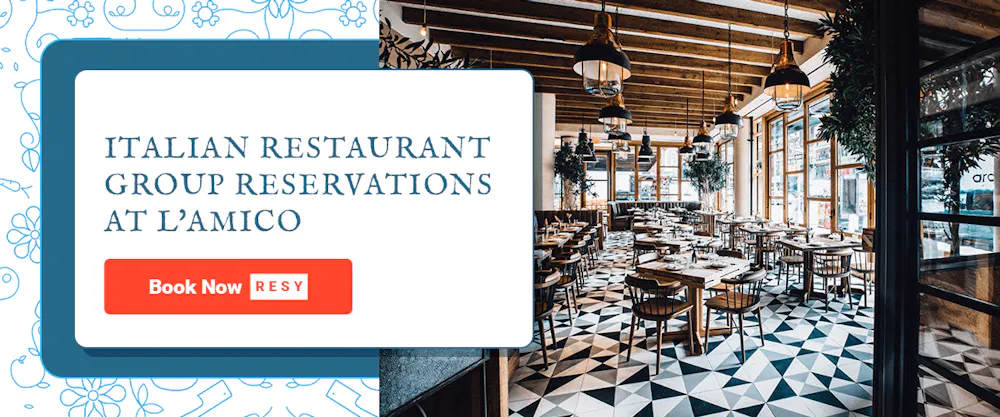
Italian Restaurant Group Reservations at L'Amico
When you're ready to book, L'Amico makes group dining in Midtown simple. We're located at 849 Avenue of the Americas, steps from Penn Station, Moynihan Train Hall and Madison Square Garden.
Chef Laurent Tourondel leads the kitchen, serving Italian cuisine in a warm atmosphere. We've been part of Midtown's dining scene for a decade, and we know what it takes to make a night feel welcoming and effortless.
If your group is heading to an event, we make an easy stop before the night begins. If you're looking for a group dinner reservation at an Italian restaurant in NYC, make a reservation online or reach out about group dining directly. We'd love to host your group.